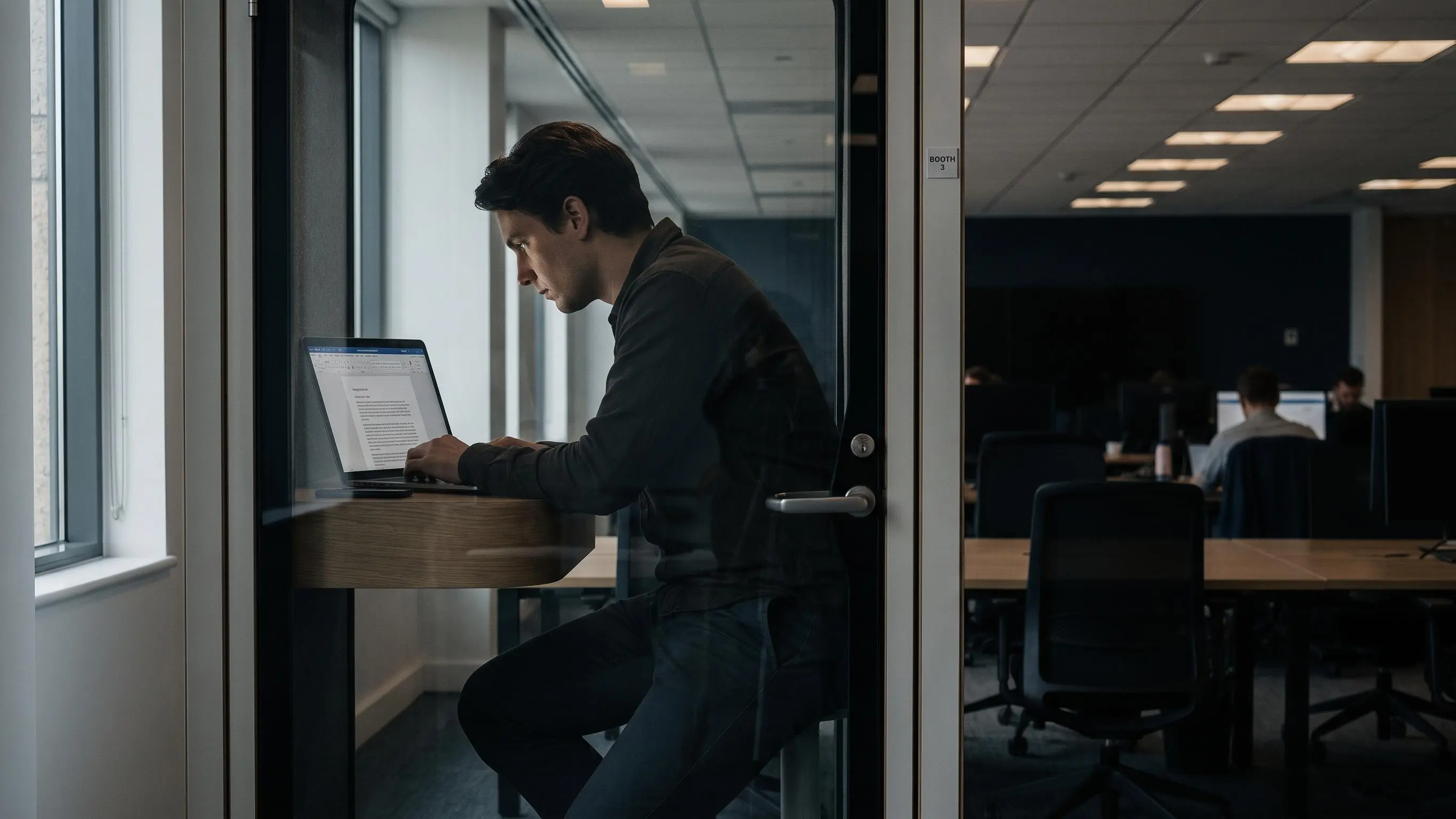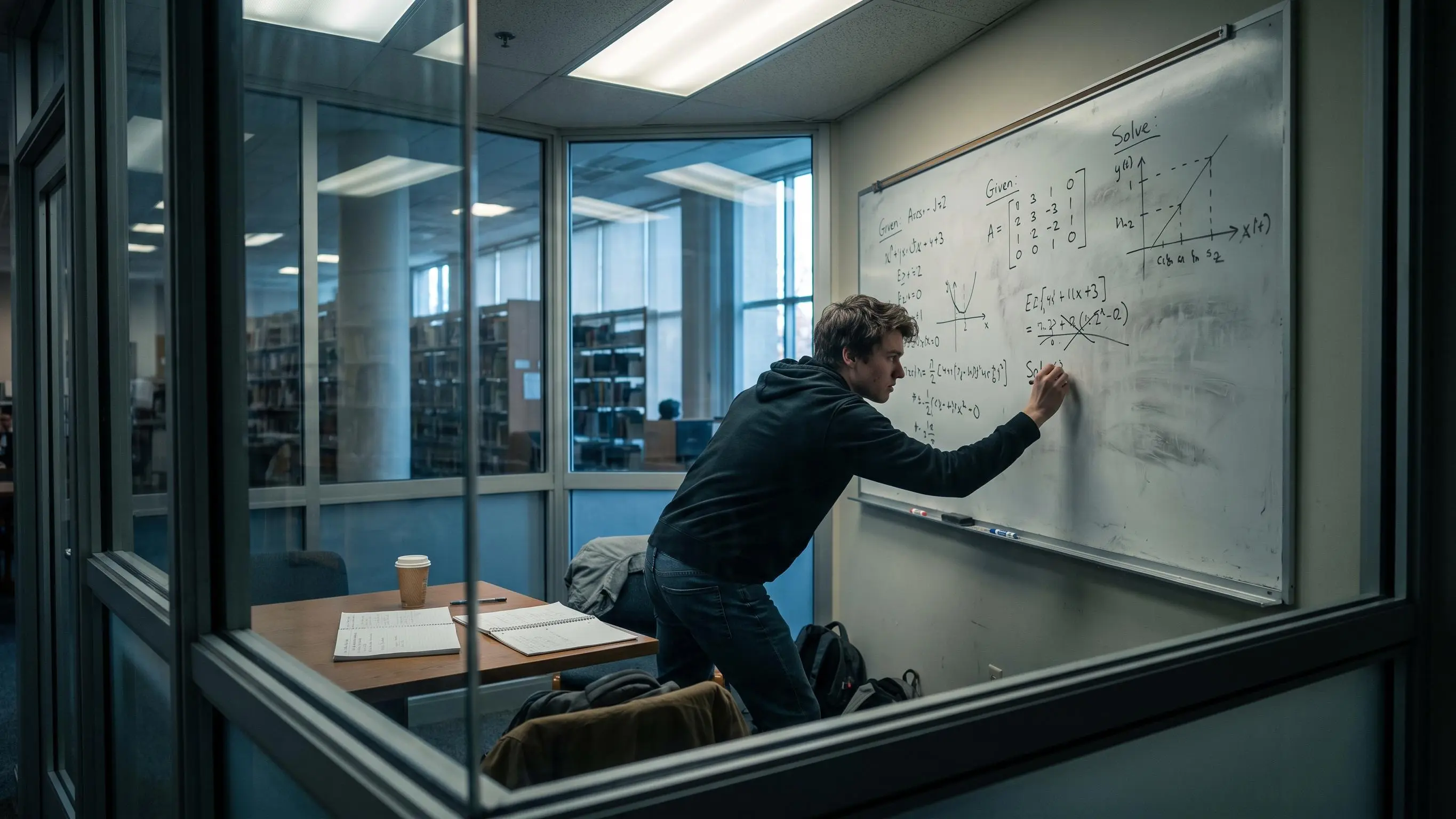

Most advice on the psychology of flow starts too late: with a timer, a playlist, and the hope you’ll feel ready. You don’t. The work usually feels sticky first, especially when your task is vague or your inbox is still blinking.
What matters is shaping one piece of real work so your attention has somewhere to land. We’re looking for calm absorption, not a perfect productivity mood.
Here’s what to notice before the next block:
- A clear finish line beats “work on it.”
- Slight stretch is useful; panic isn’t.
- Interruptions reset more than your timer.
Leave with a workday that actually moves.
What the Psychology of Flow Actually Means
The psychology of flow is the study of a mental state where you're fully absorbed in a task that feels meaningful, challenging, and still within reach. Not easy. Not chaotic. Just demanding enough that your attention has somewhere clean to go.
Researchers often describe flow as an "optimal experience." In plain English, that means your mind stops wandering so much, distractions lose some of their pull, and the work starts to feel rewarding from the inside. You keep going because the task itself has a grip on you, not because you're trying to guilt yourself through it.
A lot of people hear "flow" and think pure performance. That's too narrow. The psychology of flow also deals with motivation, engagement, well-being, and the quality of attention you bring to work. Those things matter more than most people admit. A day can look productive on paper and still feel mentally shredded by 4 p.m.
The usual ingredients show up again and again:
- clear goals
- immediate feedback
- strong concentration
- a close match between challenge and skill
- some control over how you do the task
Work-focused research keeps pointing in a similar direction. People who experience more flow at work often report better performance, stronger engagement, and lower burnout. That's not a promise that every Tuesday afternoon can become magical. It just means the state is worth taking seriously.
The useful idea here is simple:
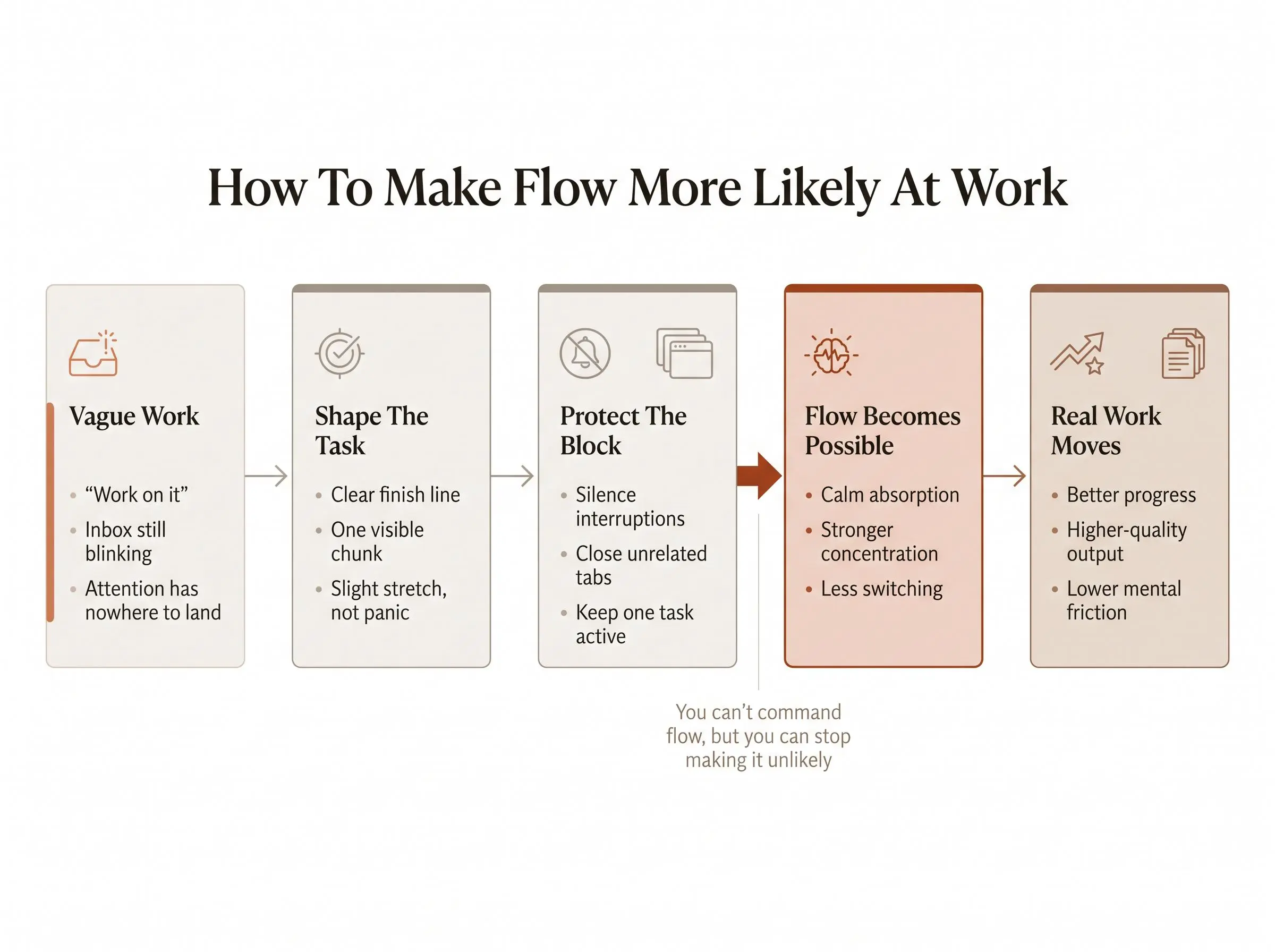
You can't command flow, but you can stop making it unlikely.
Flow State Explained Simply
Flow state explained simply means being so engaged in one task that your mind stops constantly switching, second-guessing, and scanning for escape routes.
That already separates it from a normal workday. A normal workday, for many people, is checking messages every few minutes, bouncing between tabs, and doing the task while also narrating how behind they are. That's not lack of character. It's just fragmented attention doing what fragmented attention does.
Flow also isn't the same as being busy, motivated, or excited. You can be highly motivated and still scattered. You can be busy all day and barely touch meaningful work. You can even feel resistant at the start of a task and still enter flow later.
That last part matters. Flow often begins after friction, not before it.
A familiar example:
- you start a report reluctantly
- the first 10 to 20 minutes feel clunky
- then the structure becomes clearer
- decisions come faster
- you stop checking the time
- the work starts carrying you a little
That's flow beginning to show up.
It is temporary. That's good news, actually. If flow were a personality trait, most people would write themselves off by age 23. It's a state. States can be invited.
What Is Flow State at Work, Specifically?
When people ask what is flow state at work, they usually don't mean athletes or musicians. They mean regular professional or academic work done on a laptop, in a library, or at a desk with too many tabs open.
At work, flow tends to show up during tasks that need thinking with continuity: writing, coding, analysis, design, studying, research, planning, problem-solving. Anything where the mind needs time to build momentum.
It also isn't limited to glamorous jobs. That's a useful correction. Even repetitive or transactional work can produce flow when the structure is clear, the steps are predictable, and the task asks just enough of you. Some people find flow reconciling data or cleaning a messy spreadsheet. Not exciting dinner conversation, but real.
Workplace flow depends on two things at once:
- the task itself
- the environment wrapped around it
If your priorities are fuzzy, your calendar is chopped into small pieces, messages keep lighting up, and you have little control over sequence or timing, flow has almost nowhere to land. People often blame themselves for this. We think that's backwards.
A lot of missed flow is not a discipline problem. It's a work design problem.
Why Flow Matters More Than Another Productivity Hack
Flow matters because it's one of the few states where meaningful work often feels better while also going better. That's rare enough to be worth protecting.
The work upside is fairly consistent. More flow tends to track with stronger engagement, better self-rated performance, lower burnout, and steadier attention. None of that means "always do more." It means the work can stop feeling like a constant argument with yourself.
There's also a difference between shallow efficiency and real progress. Answering twelve messages fast may look efficient. Finishing the hard section of a paper, fixing the logic in a model, or writing the difficult paragraph is usually more valuable. Flow points toward the second category.
It changes the emotional texture of work too. Instead of monitoring yourself every few minutes, asking "Am I doing enough?" you become immersed in doing the thing. Less self-surveillance. More contact with the task.
A lot of people already use timers and still end the day with that irritating question: what actually moved? That's where flow is more useful than another hack. It shifts attention from how long you sat there to how fully you engaged with the right task.
Still, flow isn't the goal of every minute. Admin exists. Replies exist. Maintenance work exists. If you expect peak absorption all day, you'll turn a good idea into another standard to fail.
How Flow Feels During Work
How flow feels during work is less dramatic than the internet likes to suggest. Usually it's not fireworks. It's steadiness.
The common markers are pretty recognizable once you've noticed them a few times:
- full immersion in the task
- background distractions fade a bit
- inner chatter gets quieter
- action and attention feel linked
- time starts behaving strangely
Twenty five minutes can disappear faster than expected. So can an hour. Not because the task became easy, but because your attention stopped leaking everywhere.
There's an important distinction here. Effort in flow isn't effortless as in "light" or "simple." You're still working. Sometimes hard. But the effort feels less conflicted. You're not spending half your energy resisting the task while trying to do it.
Emotionally, flow often feels:
- calm but alert
- stretched but not panicked
- focused without feeling forced
Self-consciousness tends to drop too. You worry less about whether you're productive while you're actively producing something. Quietly, that's one of the best parts.
And no, flow doesn't always feel euphoric. Sometimes it feels ordinary in the best possible way. Solid. Stable. Like your mind finally stopped slipping on the floor.
Signs of Flow at Work You Can Actually Notice
It's better to look for signs of flow at work than to wait for some grand feeling to announce itself.
In the moment, the signs are usually concrete:
- you stop wanting to switch tasks
- the next step gets clearer after you begin
- distractions register but don't pull you away easily
- decisions happen faster because the context stays alive in your head
- the task feels challenging, but not impossible
- breaks feel needed after real absorption, not after five minutes of restlessness
Some signs only show up afterward. You realize you made more meaningful progress than expected. The output is better than when you were multitasking. You remember fewer attention breaks because there were fewer of them.
It also helps to know what flow is not. Racing thoughts, frantic output, and the sense that you're barely holding on usually point to overload. Numb grinding, passive clicking, and work that feels dead on contact usually point to disengagement.
One good session is encouraging. Repeated conditions matter more. If flow shows up three times in a week under similar circumstances, that's information you can use. If it only appears when you're accidentally left alone for 90 minutes, that's information too.
Deep Work vs Flow State
People mix these up constantly, so let's keep it clean. In the deep work vs flow state question, deep work is usually the structure. Flow is the state that may arise inside it.
A short comparison helps:
- deep work is a protected work practice
- flow is a psychological experience
- deep work can be scheduled
- flow can be invited, not guaranteed
- deep work is behavior
- flow is state
We tend to think of deep work as the container. Protected time, reduced distraction, one demanding task. Flow is what sometimes happens when that container is good enough and the task is shaped well.
You can absolutely do deep work without entering full flow. That still counts. A focused 45-minute block with decent progress is not a failure because it wasn't transcendent. Let's stay sane.
Flow can also happen outside formal deep work blocks, but it's less likely when your day is chopped into fragments. If you keep setting aside time and still feel scattered, the missing piece may be goal clarity, challenge level, or feedback. If you keep chasing the feeling of flow without protecting time, the environment is probably the real blocker.
The Conditions That Make Flow More Likely
This is the practical core. Flow gets more likely when a few conditions line up, and most of them are surprisingly ordinary.
Clear goals
The mind settles faster when the task has a visible finish line. "Work on project" is too vague. "Draft the introduction" or "reconcile the data set" gives attention something firmer to lock onto.
Immediate feedback
Flow strengthens when you can tell, during the session, whether you're moving. Word count helps. Solved problems help. Checked steps help. So do completed focus blocks. Waiting until the very end for feedback makes attention wander.
Challenge matched to skill
Too easy and you drift. Too hard and you tense up or avoid the task altogether. The sweet spot is difficult enough to require your full attention, but not so difficult that you freeze.
Protected concentration
Interruptions matter more than people like to admit. They don't just steal minutes. They break continuity. And continuity is the actual fuel here.
Control and simplicity
Autonomy over timing, order, and method helps. So does a simple system. Too many moving parts can make work feel productive while quietly preventing absorption.
Meaning and recovery
Flow is easier when the task matters and connects to a real weekly goal, not just vague obligation. Recovery matters too. Poor sleep and nonstop pressure don't make you tough. They make tomorrow's attention worse.
Music Is Not a Universal Flow Shortcut
Background music can change the conditions for concentration, but it is not a reliable shortcut into flow. In a randomized study of 428 Chinese undergraduates completing a working-memory task, Mozart’s K448 showed a positive immediate indirect effect on performance through flow and engagement (β = 0.118), while high-arousal music showed a negative effect (β = −0.112). After 30 days of familiarization, the reported flow-enhancing effect of Mozart K448 fell from B = 0.321 to B = 0.150—a 53% decline.
The practical takeaway is modest: if music helps you settle into demanding work, treat it as a personal environmental variable to test, not a productivity guarantee. Try the same task with quiet, a familiar low-distraction track, and no music; then compare interruption count, immersion, and output quality across several sessions. The study used a controlled student task, so it cannot tell us which soundtrack will help every kind of real workplace work. The experiment does make one point clear: more stimulating is not automatically more focused, and even a helpful sound environment can lose its effect with repetition.
The Four-Part Flow Cycle Most People Miss
A lot of people treat flow like a switch. On or off. That model causes unnecessary shame.
A more useful view is a cycle with four phases:
struggle
The task feels resistant. Attention keeps slipping. Starting feels heavier than it should.release
Pressure softens a little. You stop fighting the fact that you're doing the task.flow
Concentration deepens. The work gets more fluid. Decisions tighten up.recovery
You step away, restore energy, and give the brain room to reset.
The struggle phase is where many sessions get abandoned. That's also where procrastination spikes. People read those first awkward minutes as proof they "can't focus today," when often they're just at the front edge of the cycle.
A blunt truth: many people quit a task right before their attention would have settled.
Recovery is the part hustle culture keeps trying to delete. Bad idea. If every session runs too long or ends in depletion, your next session starts in worse shape. The cycle doesn't care how motivated you are.
Why Modern Work Makes Flow Harder Than It Should Be
Modern work is very good at producing reaction and pretty bad at protecting attention.
The usual obstacles are familiar:
- constant notifications
- chat tools
- context switching
- fragmented calendars
- unclear priorities
- always-on expectations
People get interrupted, reoriented, interrupted again, and then wonder why deep concentration feels rare. Re-entry takes time. Not forever, but longer than the interruption itself. That's the hidden cost.
This is why attention management now matters as much as time management. A full day can still be mentally scattered if it was built from partial attention.
There's also an emotional trap in that setup. When your workday is built around reaction, it's easy to decide that you're bad at focus. Often the system is bad at supporting focus. That's not an excuse. It's a more accurate diagnosis.
A Practical Way to Invite Flow Into an Ordinary Workday
You don't need a dramatic reset. You need a method you can repeat on a normal Wednesday.
Try this:
Try this sequence
- Pick the task
Choose one most-important task.
One primary target cuts cognitive drag. Five "top priorities" is just clutter with nicer branding. - Define the chunk
Define the next visible chunk.
Make it small enough to finish in one focused block. - Estimate effort
Estimate the effort honestly.
Rough estimates help. They turn the task from a foggy obligation into a bounded commitment. - Protect the window
Protect a short work window.
Start with something realistic. Waiting for a perfect two-hour opening is how nothing starts. - Remove distractions
Remove live distractions first.
Silence notifications. Close unrelated tabs. Put messages out of sight. - Track progress
Use progress feedback during the block.
Keep some visible sign that work is moving. - Review the session
Review what actually happened.
Where did attention break? Was the estimate close? What helped you settle?
This is where a tool can help, if it supports the method instead of replacing it. Our Daily Planner is built around choosing one most-important task, keeping the list short, and comparing estimated time with actual time over real days. That's useful because planning and focus shouldn't live in separate worlds. Still, the method matters more than the tool. A bad process with a nice timer is still a bad process.
How to Measure Flow Without Turning It Into Another Obsession
Flow is partly subjective, so the simplest measurement is reflective. After a session, ask:
- how immersed did you feel?
- did time seem to compress?
- how often did attention drift?
- did the task feel matched to your current skill?
Look for patterns across sessions, not verdicts from one block.
You can also use practical proxies that don't require neurotech:
- task completion
- estimate versus actual time
- reduced switching
- better quality output
- steadier energy afterward
Our Focus Timer is useful here because it ties sessions to planned tasks. That sounds small, but it changes the data. A timer detached from the work tells you minutes passed. A timer attached to the task tells you something more honest.
For readers who already own a Muse headband or are curious about measurement, EEG can add another layer. Our Flow Tracking can show focus quality during work and classify states like flow, overload, and low engagement after a short calibration. Useful, if you treat it properly.
The point is not to perform focus for a metric. More data only helps if it changes how you plan, shape tasks, or recover.
Common Misconceptions About Flow at Work
A few misconceptions cause most of the confusion.
Flow does not mean loving every minute of work. It's about absorption, not constant pleasure.
It doesn't belong only to creative genius mode either. Structured work can produce flow just fine.
A session without flow is not a failed session. Plenty of good blocks are simply focused, useful, and unglamorous.
More challenge does not automatically create more flow. At some point challenge becomes overload, and overload doesn't make you sharper. It makes you avoidant.
Discipline isn't the whole answer. Task design, environment, and recovery are part of the psychology of flow too.
And no, you shouldn't chase flow all day. Some work is administrative. Some work is maintenance. The real aim is more consistent access to meaningful, protected attention.
That's enough.
When Flow Is Unlikely and What to Do Instead
Some days aren't good flow days. Pretending otherwise usually makes them worse.
Flow is less likely when you're severely tired, constantly interrupted, caught in emotionally charged conflict, staring at a task that's still too vague, or facing demands well beyond your current skill without support.
When that happens, try the next best move:
- shrink the task
- ask for clarity
- shorten the session
- do setup work first
- recover before attempting heavy cognitive work
Sometimes the right move isn't deeper effort. It's better task shaping. That's a quieter skill, but a very real one.
Low-focus days don't need moral drama. Good planning and honest feedback loops are part of the psychology of flow, not separate from it.
What This Looks Like Over a Week, Not Just One Good Session
One nice session is encouraging. A week of patterns is more useful.
Flow gets more reliable when you notice repeatable conditions: your best time of day, which tasks push you into overload, which block lengths actually work, and which environments reduce switching. Most people don't need more motivation. They need cleaner pattern recognition.
A simple weekly record can include:
- planned main task
- session length
- immersion level
- interruptions
- completion quality
Visible progress helps too. It reduces that vague, annoying feeling that nothing got done when in fact several solid blocks happened. That's part of why Flocus is built around daily planning, completed focus blocks, a progress ring, streaks, and recap insights rather than isolated timer minutes. The point isn't to gamify your life. It's to make real work visible enough that you can learn from it.
Sustainable flow comes from repeated honest adjustments, not heroic intensity.
Conclusion
The psychology of flow is really about how attention, challenge, goals, and feedback come together to create deep absorption. At work, that state is useful and real, but it isn't magic and it isn't a moral test.
Deep work gives you the protected structure. Flow is the mental state that may show up inside it. Sometimes it will. Sometimes it won't. Better focus usually starts smaller than people expect: one clear task, one protected block, one honest review afterward.
Tomorrow, pick one meaningful task. Protect a short block for it. Then notice what helped your mind settle instead of judging yourself for every distraction. That's a much better place to start.
Article Record
ReferencesPrimary sources used for this article
- Frontiers | Fostering flow experiences at work: a framework and research agenda for developing flow interventions
- Frontiers | The Cognitive Control Model of Work-related Flow
- Frontiers | Simplicity and predictability: a phenomenological study of psychological flow in transactional workers
- Grow with the Flow
- The Impact of Background Music on Flow, Work Engagement and Task Performance: A Randomized Controlled Study