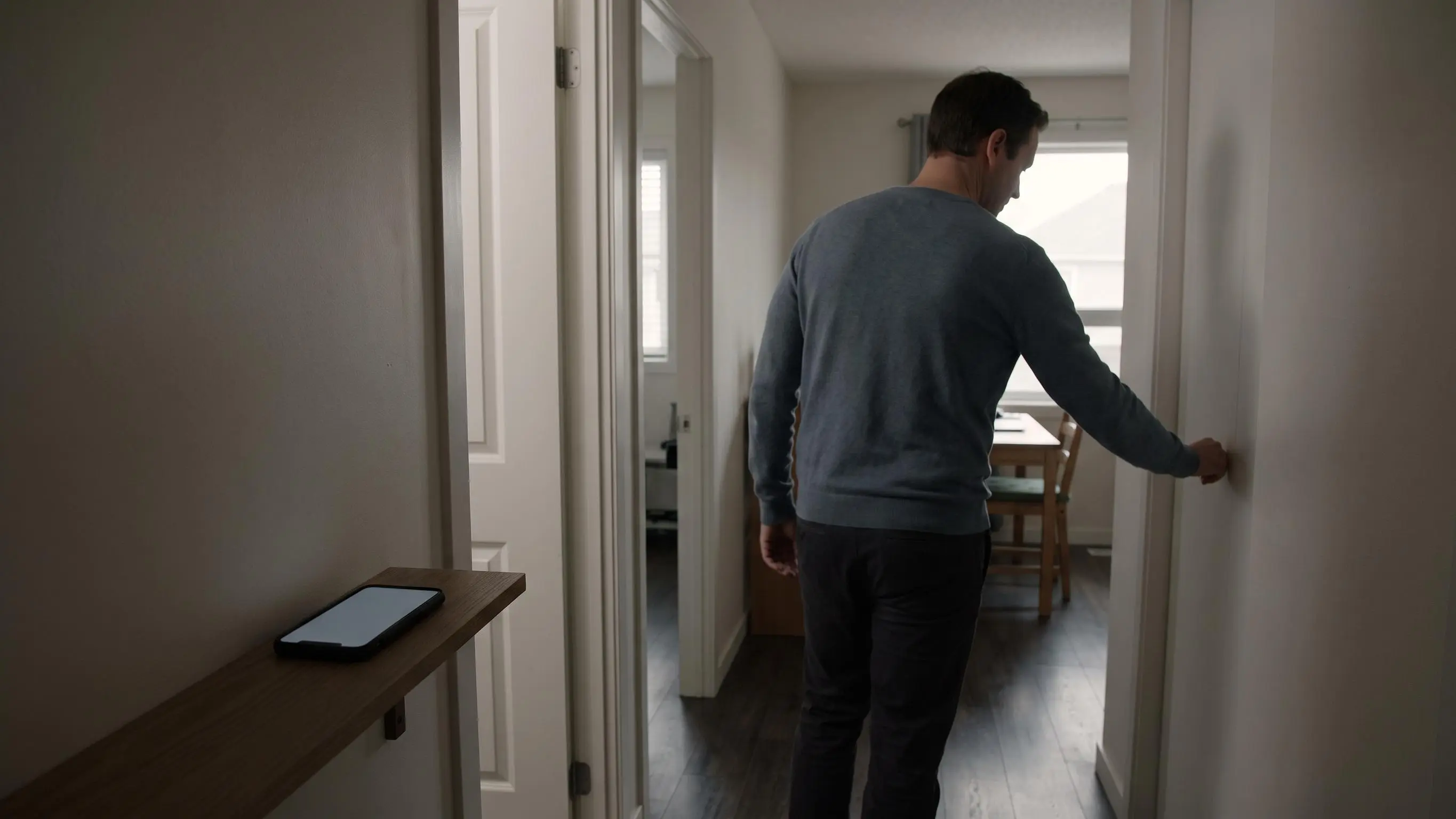

When you ask what is deep work, you are usually asking why a good hour vanished into tabs, email, and fake prep. Most advice starts with a timer and skips the part that matters.
What matters is simpler than people make it. One hard task, a clear finish line, and enough quiet to think. If that sounds obvious, well, it isn't in practice.
Keep these in mind.
- A 25-minute block counts if the task is specific.
- Inboxes and chats feel productive, but they rarely move the real thing.
- Planned time versus real time is how you stop guessing and finish.
What Deep Work Actually Means
If you're asking what is deep work, you're probably not looking for a poetic definition. You're trying to understand why a full day can feel busy and still produce almost nothing you care about.
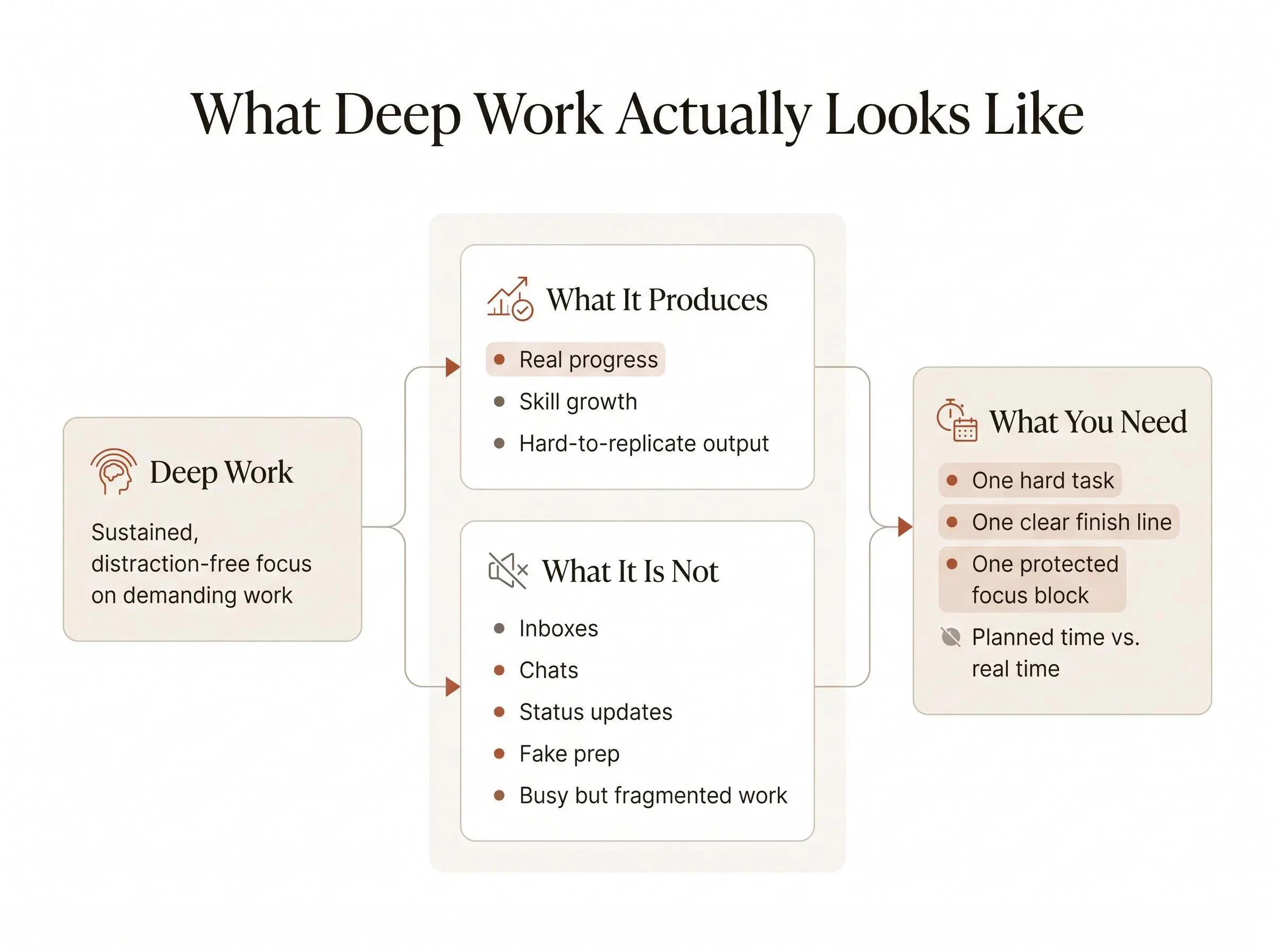
Deep work is sustained, distraction-free concentration applied to demanding work. That includes writing, studying, coding, research, analysis, design, and problem solving. Work where your brain has to actually do something, not just respond.
Three traits tend to show up at the same time:
- It stretches your thinking
- It improves your skill
- It produces something harder to replicate
That last part matters. Anyone can spend an hour shuffling tabs, checking messages, and touching six tasks badly. Deep work creates output with some weight to it. A finished section. A solved problem. A real decision.
This is not the same as being busy, motivated, or parked at a desk for four hours. We've all had days that looked serious from across the room and were mostly advanced procrastination.
Deep work also isn't a personality type. It's not reserved for disciplined monks, top students, or people who enjoy silence a bit too much. It's a way of working. You can build it. You can lose it. You can rebuild it.
For people who feel mentally scattered but still care about doing meaningful work, the phrase matters because it names the actual problem. Usually the issue isn't a lack of ambition. It's that your attention keeps getting chopped into pieces before it can do anything useful.
Deep work is not about trying harder. It's about staying with one hard thing long enough for your mind to become useful.
Why Deep Work Matters More Than Ever
Focused concentration has become more valuable at the exact moment it became harder to keep. That's the tension.
For students and knowledge workers, the payoff is practical. Deep work helps you learn difficult material faster, produce stronger output, and spend less time re-entering the same task over and over. A hard chapter gets understood instead of reread. A strategy doc moves from vague notes to a draft someone can react to.
The emotional payoff is just as real. Less frantic busyness. More visible progress. Less of that end-of-day feeling where you've been active for ten hours and somehow avoided the main thing.
Many high performers don't treat productivity like a mood. They treat it like a system to design. One professor improved his research output after deliberately protecting larger blocks for writing and research instead of letting obligations fragment the day. That's not glamorous. It's just structurally smarter.
A lot of people are still waiting to feel ready before they start concentrated work. That usually means they start after lunch, after messages, after admin, after one quick check that becomes twelve. By then the day is already leaking.
Deep work is a performance skill, yes. It's also relief. It gives your mind a place to land in a noisy system that keeps asking for partial attention.
Deep Work vs. Shallow Work
Not all work deserves the same kind of protection. That's where people get stuck.
Shallow work is logistical, low-cognitive work that's easy to replicate and often done while distracted. Think:
- Inbox triage
- Chat replies
- Status updates
- Calendar cleanup
- Small admin tasks
- Routine browsing dressed up as research
None of that is useless. Some of it is necessary. The problem is that shallow work expands to fill the day when left unmanaged. It feels productive because it's visible and responsive. It also quietly eats the hours your important work needed.
A simple way to audit a recent day is to ask two questions:
- Did this task require real concentration?
- Would meaningful progress have happened if I kept switching away from it?
If the answer to both is yes, it likely deserved deep work protection. If not, it probably belonged in a lighter batch later in the day.
Deep work creates original output, learning, and momentum. Shallow work maintains systems and communication. Useful, but rarely decisive.
A lot of people think they need a better timer. Often the real issue is that too much of the day has already been spent reacting.
What Deep Work Looks Like in Real Life
In practice, deep work is less dramatic than people think. It often looks like drafting a paper, working through a dense chapter, solving a technical problem, writing a strategy document, or building a presentation from scratch without checking messages every six minutes.
It usually starts with friction.
The first few minutes can feel noisy and resistant. Your mind throws up random errands, unrelated ideas, and a sudden interest in adjusting your playlist. That's normal. Concentration often gets easier only after you've protected enough time for the mental static to settle.
This is one reason 25-minute blocks are such a common entry point. They're short enough to start, long enough to matter. For many people, that's where real concentration begins to take shape.
Deep work does not require perfect silence, a weekend retreat, or a six-hour session in a cabin. One well-chosen priority and one protected block count. In fact, for beginners, that counts more than a grand plan that collapses by Tuesday afternoon.
There's also a difference between deep work and productivity rituals that look organized. Color-coding tasks, rearranging notes, and testing apps can feel responsible. If sustained concentration never happens, they're just cleaner forms of avoidance.
If the session never asks anything hard of your mind, it probably wasn't deep work.

Deep Work for Beginners: Start Smaller Than You Think
If you've bounced off all-or-nothing productivity systems, that's not a character flaw. Most of them ask for too much structure too soon, then act surprised when people quit.
Deep work for beginners should start small. Not symbolically small. Actually small enough that you'll do it again tomorrow.
To start deep work practice without overwhelm, use a narrow setup:
- One meaningful task
- One clear outcome
- One protected focus block
Pick a task important enough to matter but small enough to begin today. "Revise the entire paper" is too vague. "Draft the opening section" is workable. "Study chemistry" is fuzzy. "Complete problems 1 through 4 and mark what I don't understand" is better.
Decide in advance what success looks like for the session. That reduces friction more than people expect. Your brain resists ambiguity almost as much as difficulty.
Short sessions still count. They're training reps for attention. Build frequency before duration. A repeatable 25-minute practice beats a heroic three-hour session you now dread.
This is where a lot of beginners go wrong. They judge the practice by how intense it feels rather than whether it can survive an ordinary week.
A Simple Deep Work Method You Can Repeat
You don't need a baroque system. You need a method that survives contact with real life.
Here's a simple deep work method:
- Choose one most-important task. Give your attention a single target.
- Define the next concrete milestone. Outline one section, solve one problem set, draft one page.
- Estimate the work in focus blocks. Even a rough estimate is better than wishful thinking.
- Start a timed block and remove obvious distractions. Close extra tabs. Put the phone away. Don't negotiate with yourself here.
- Work only on that task until the block ends. Then take a deliberate break.
- Record what actually happened. Finished, partial, stuck, took longer than expected. That's useful data.
For example, imagine you need to draft the opening section of a report. Instead of writing "work on report" in your plan, define the block as: 25 minutes to create a rough opening and list the two points it needs to cover. Close email, keep the report and one source open, and put unrelated reminders on a notepad rather than acting on them. When the block ends, record whether you drafted the opening, got partway through, or stayed stuck on the first paragraph. The next block can then begin with a specific action, such as revising that opening or adding the first supporting point.
We've built Flocus around this planner-first approach because a timer by itself only tracks minutes. It doesn't tell those minutes where to go. In the Flocus Daily Planner, you choose one priority, keep the list short, estimate work in blocks, then run those blocks with the Focus Timer against the plan. Afterward, you compare estimated versus actual time.
That estimate gap is not a failure report. It's how your planning gets honest.
A standalone timer says, "you worked for 25 minutes." A plan-linked method says, "you spent 25 minutes moving this important thing forward." Very different feeling by the second afternoon.
Beginner Focus Habits That Make Deep Work Easier
Deep work gets easier when you stop relying on willpower for every session. A few beginner focus habits can do more than a motivational speech ever will.
A consistent start ritual helps. Keep it plain. Sit down, open the task, start the timer, put the phone out of reach, begin. Repetition matters more than atmosphere.
Useful environmental cues are boring on purpose:
- A cleared desk
- One open tab if possible
- A notebook for intrusive thoughts
- Phone physically out of reach, not face down beside you
That notebook trick is underrated. Random reminders feel urgent because your brain doesn't trust you'll remember them. Write them down and get back to work.
Boredom tolerance matters too. Frequent checking trains your brain away from depth. Every tiny novelty hit teaches it that effort should be interrupted. Then people wonder why concentration feels harder each week.
It helps to batch light work into set windows. Email, messages, and routine admin don't need to sit on your shoulder all day. A clear shutdown routine also matters more than it gets credit for. If you don't close the workday, work keeps leaking into the evening as low-grade mental static.
For tracking, keep it simple. Measure completed deep blocks or the percentage of the day spent in real focused work. Simple metrics tend to survive.
How to Protect Deep Work in a Distracted World
Deep work usually fails because the conditions weren't protected, not because you were lazy. That's a more useful diagnosis.
Block time in advance. Don't hope focus appears in leftover gaps between meetings, replies, and errands. It rarely does. Schedule deep work during your peak hours if you know them. For many people, mornings are better. By midafternoon, the brain is often willing but not exactly sharp.
Larger blocks help when you can get them. Fragmented calendars are hostile to depth. Even two half-hours separated by chat notifications don't add up to one solid hour.
A few boundary examples work well in real life:
- Students: study with messages off for one block, then check after
- Remote workers: set a visible focus window and batch replies after it
- Office workers: protect one early block before meetings and status churn begin
Interruptions still happen. Use a reset protocol:
- Note where you stopped
- Handle or dismiss the interruption
- Restart with a very small next action
Not "get back into flow." Just "write the next sentence" or "solve the next step." Small re-entry points save sessions.
Protect attention like a resource. Because it is.
Deep Work Without Burnout
Some people hear "deep work" and imagine long, punishing days of intellectual self-denial. No wonder they avoid it.
Deep work without burnout depends on intensity with limits. Not endless hours. Not turning every workday into a discipline contest.
A sustainable rhythm usually includes:
- A few real focus blocks
- Planned breaks
- Lighter admin time
- A genuine end to the day
More deep work is not always better. Session quality drops. Recovery disappears. The practice turns sour.
Watch for warning signs:
- Overstuffed plans
- Skipping breaks to make up for bad estimates
- Constant self-criticism
- Turning focus into another guilt project
Deep work should narrow effort to what matters most. It should make work clearer, not heavier. If your system leaves you feeling behind every day, the system is wrong.
This is anti-hustle in the least dramatic way possible. We don't need more intensity theater. We need work rhythms we can trust.
How to Measure Progress Beyond Time Spent
Minutes alone can be misleading. Sixty tracked minutes on the wrong task is still sixty minutes on the wrong task.
Measure a mix of inputs and outcomes:
- Planned versus completed focus blocks
- Estimated versus actual time
- Progress on the most-important task
- Quality of output
- Ease of re-entering focus over time
Reviewing these patterns tells you things a timer can't. Maybe you're underestimating hard tasks. Maybe your best focus window is earlier than you thought. Maybe shallow work keeps crowding out the day's real priority.
Visible completion cues help too. A filled progress ring, a streak, a weekly reflection. Not because you need gamified pressure, but because your brain responds well to closure. At Flocus, that's why we use a daily Focus Ring and recaps grounded in real sessions. You can see whether the plan matched the day, not just whether a timer ran.
Honest feedback turns deep work from a nice idea into a trainable practice.
What Flow Has to Do With Deep Work
Deep work and flow are related, but they aren't the same thing.
Deep work is the structured practice of creating conditions for concentration. Flow is the absorbed state that sometimes appears inside those conditions. Useful distinction. You do not need a perfect flow state for deep work to count.
In plain terms, deep work is the setup. Flow is the thing that may happen once you're far enough in.
Some people are curious about measuring focus quality, not just session length. That's where Flocus Flow Tracking can be an interesting optional layer for Muse headband users. It can show a live flow score during a session and classify engagement patterns after a short personal calibration. For the right person, that's useful feedback.
But it is optional. The planner works without hardware. The habit comes first.
Neurofeedback isn't magic. It's measurement. If you're curious and already have the device, it can add another lens. If not, you are not missing the foundation.
Common Mistakes That Keep Deep Work From Working
Most deep work problems are setup problems wearing a moral costume.
Common mistakes include:
- Starting with sessions that are too long
- Choosing vague priorities like "work on project"
- Running a timer without deciding what the block is for
- Expecting perfect concentration immediately
- Leaving communication tools open, then blaming yourself
- Treating shallow work as evil instead of containing it
- Overfilling the day with ambitious plans
- Never reviewing what worked
- Turning deep work into an identity test
That last one does real damage. Deep work is not proof that you're serious, smart, or disciplined. It's a practical method for directing attention. Some sessions will be messy. Some will be interrupted. Some will reveal that the task was less clear than you thought.
Good. Now you know.
A One-Week Plan to Start a Deep Work Practice
Don't wait for a cleaner week. Use this one.
Day 1: Identify one most-important task and one likely distraction to remove.
Days 2 and 3: Schedule one short protected block. Before you begin, define a concrete outcome.
Day 4: Check whether the task took more or less time than expected. Adjust the next block instead of pretending the estimate was fine.
Day 5: Add one habit. Batch email. Use a start ritual. Set a shutdown time. One is enough.
End of week: Review what time of day felt best, which tasks supported depth, and what repeatedly broke focus.
If you want to start deep work practice in a realistic way, look for consistency and honesty, not a perfect streak. Deep work for beginners is mostly about removing drama from the process. Show up, protect the block, learn from what happened, repeat.
Conclusion
Deep work is not a rare personality trait. It's a trainable way of working that starts with one clear priority and enough protection for concentration to take hold.
The useful distinctions are simple: deep work versus shallow work, planning versus vague intention, measured progress versus guessing. Most people don't need more pressure. They need a calmer method and better feedback.
So start there. Choose one important task. Protect one focused block for it. Then review what actually happened so tomorrow's plan gets smarter.
That's usually enough to begin.
Article Record
ReferencesPrimary sources used for this article
- Deep Work by Cal Newport | Hachette Book Group
- Is deep work the most underappreciated skill for career success? An interview with Cal Newport. | 80,000 Hours
- Deep Work: The Secret to Achieving Peak Productivity - Knowledge at Wharton
- Deep work: Meaning, benefits, and 7 ways to focus today
- Deep Work: The Complete Guide (Inc. a Step-by-Step Checklist)
- Cal Newport on finding focus in the age of distraction | Dropbox Blog
Update HistoryMeaningful revisions to this article
- Added a repeatable example to show readers how to apply the deep work method in their daily routine.