

Most schedules fail before lunch because they’re built for a version of you with no messages, meetings, or tired 3 p.m. brain. A realistic daily schedule starts with what your day can actually hold.
What matters is not packing every gap. It’s protecting one meaningful task, estimating work in blocks, and leaving room for the usual mess.
Start by noticing:
- Which fixed commitments already own your best hours
- What one task is concrete enough to begin in 25 minutes
- What gets cut when the day shifts
Finish the day with progress, not carryovers.
What a Realistic Daily Schedule Actually Looks Like
A realistic daily schedule is not a fantasy version of your life with perfect focus, no interruptions, and suspiciously clean energy. It's a plan that fits the day you actually have.
That sounds obvious until you look at most people's schedules. They aren't built from real constraints. They're built from hope, guilt, and a weird belief that if the list looks ambitious enough, we'll become the sort of person who finishes it.
A schedule becomes realistic when it does a few plain things:
- it fits your actual time, not just the blank spaces on your calendar
- it respects your attention, not just your intentions
- it can survive a normal amount of friction
- it repeats well enough that you can trust it tomorrow too
That last part matters more than people think. A to do list is not a schedule. A calendar is not a schedule either. One is a pile of intentions. The other is a map of commitments. A working schedule sits between them. It tells you what you will actually try to do, when, and in what order.
And no, realistic doesn't mean timid. It means you stop pretending every day can hold twelve meaningful things. Usually it can't. A good day is often one meaningful priority, a short list around it, and a few protected blocks where your brain gets a fair shot.
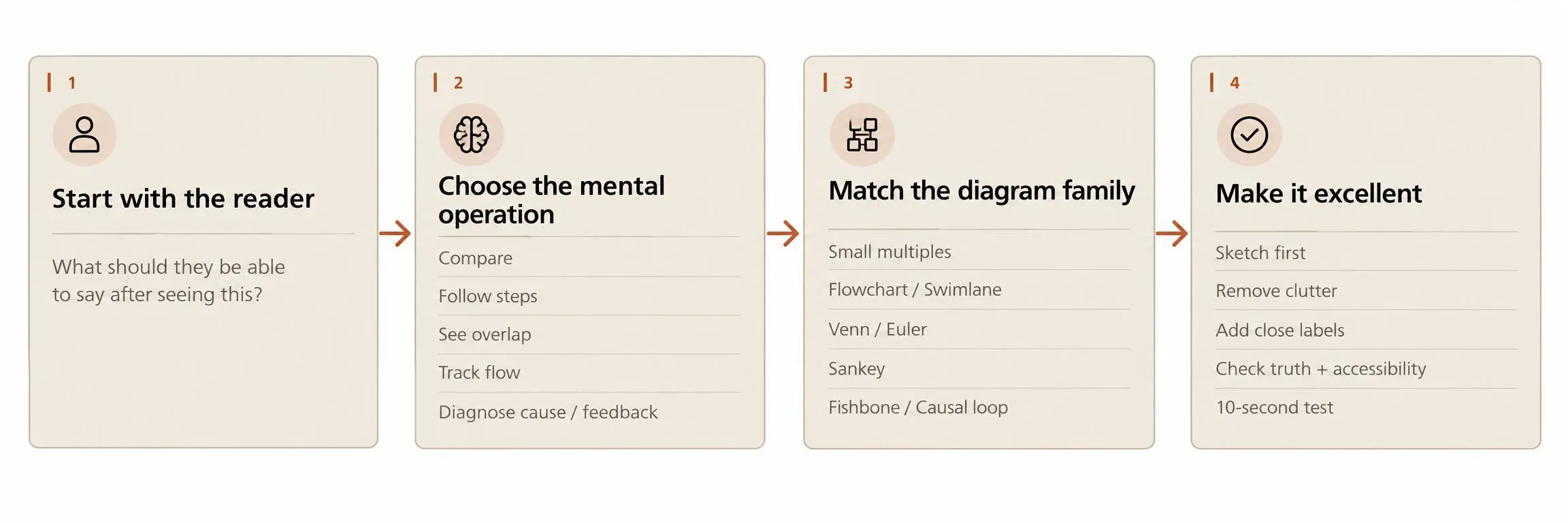
That's the method here:
A practical planning sequence
- Capacity
assess real capacity
- Priorities
choose what matters most
- Time estimate
estimate honestly
- Buffer
leave margin
- Replan
replan when the day shifts
- Review
review what actually happened
A schedule should be judged by completion, clarity, and repeatability. Not by how full it looks at 8:12 a.m.
Why You Keep Overestimating Your Day
Most daily planning mistakes start with one bad assumption: available time equals usable time. It doesn't.
You may have eight working hours on paper. That does not mean you have eight hours of clean, concentrated effort. Some of those hours will disappear into setup, messages, meetings that run long, finding the right document, and the small psychic cost of switching from one thing to another. By mid afternoon, some of them will disappear because your brain simply isn't as good as it was at 9:30.
We also plan at our best-case speed. That's another trap. We estimate tasks based on the fastest we've ever done them, or the version where we already know what to say, where the files are open, and nobody pings us. Then real life arrives, rude as usual.
Invisible work is where the plan quietly breaks:
- answering messages
- gathering notes
- opening tabs and getting oriented
- breaks that should have happened earlier
- context switching after meetings
- the recovery time after difficult work
None of this feels important enough to schedule, so it stays off the page. Then the page lies to you.
There's also an emotional layer. Overpacking a day can feel productive before you've done anything. It gives you a quick hit of seriousness. Sometimes it's optimism. Sometimes guilt. Sometimes it's a way to avoid choosing, because choosing one thing means admitting you can't do everything.
That repeated failure does real damage. After enough collapsed plans, the problem starts to feel personal. You stop thinking, "this schedule is structurally bad," and start thinking, "maybe I'm bad at this." Usually you're not. Usually the schedule was asking for too much from a normal human day.
When the plan fails every day, stop blaming the day and inspect the plan.
How Much Can You Really Do Today?
If you want to know how much you can do today, start with subtraction. Ambition is not useful yet.
Look at the fixed commitments first: meetings, classes, appointments, commute, family stuff, nonnegotiable admin. Put those on the table before you even think about focused work. Otherwise you're planning on stolen time.
After that, ask a more honest question: where are the actual blocks of uninterrupted attention? Not "free time." Real work time.
Classify the day before you fill it
This helps more than most productivity advice, and it takes about thirty seconds. What kind of day is this?
- a deep work day
- a meeting-heavy day
- a catch-up day
- a fragmented day where you should stop pretending miracles will happen
That label changes the plan. On a deep work day, you might get two or three serious focus blocks. On a meeting-heavy day, one solid block may be the win. On a catch-up day, the job is often to clear friction, not produce brilliance.
Then add the energy lens. Some hours are sharp. Some are decent. Some are for admin and mercy. Put demanding work where your brain still has teeth.
A simple reality check helps:
- if several things go right, what can you probably finish?
- if the day gets messy, what is the minimum version of success?
Leave space you don't assign. Deliberately. If every minute has a job, the first delay wrecks the whole schedule. People call that being disciplined. It usually means the plan was brittle.
Pick One Thing That Makes the Day Count
A realistic daily schedule needs an anchor. Otherwise the day gets eaten by errands, replies, and tasks so small they multiply when observed.
We use one most important task for that reason. Not because only one thing matters, but because one thing has to win when the day gets crowded. It should move real work forward, not just create the feeling of movement.
The rule is simple. Your priority should:
- matter beyond today
- be concrete enough to start
- fit the time and focus this day can actually support
"Work on proposal" is not a usable priority. It's a project title wearing a fake mustache. "Draft pricing section for proposal" is better. "Revise intro and send version for review by 3 p.m." is better still.
Large projects have to be shrunk to day size. That's the move people resist. They want to schedule the whole mountain because it feels bold. But the day only accepts pieces.
Try a three-part filter for everything else:
- must do
- should do
- nice to do
If your list has ten must dos, it has zero. That's just panic formatting.
This is also why our Daily Planner is built around one most important task and a deliberately short list. A calm plan beats an endless backlog. You don't need more places to dump obligations. You need a way to see what today is actually for.
Estimate Work in Focus Blocks, Not Vague Chunks of Time
A lot of planning goes wrong because the tasks aren't real yet. They're foggy labels like "study chemistry" or "work on report this afternoon." Those are not estimates. They're weather.
Time estimate planning gets better when you use a practical unit of effort. We like focus blocks for that. One task might take one block, three blocks, maybe more. The point is that each estimate becomes testable.
A 25 minute block is a good default because it's long enough to get traction and short enough to begin without drama. Some work needs longer blocks, and that's fine. The useful part is the boundary.
Rewrite the task until you can estimate it
Here's the difference.
- write chapter
- outline section one, draft intro, revise notes
Or:
- study history
- review lecture notes for 25 minutes, make flashcards for 25 minutes, self test for 25 minutes
Now you can plan them. More important, you can learn from them.
When estimating, include the parts people skip:
- startup time
- reading or note gathering
- finding your place again
- wrap-up and saving loose ends
Familiar work is easier. Novel work needs margin. If you've done a task twenty times, one block might mean something. If it's new, your estimate is mostly a guess dressed up as confidence.
This is why estimate-versus-actual tracking matters. In Flocus, every focus block logs what you thought it would take and what it actually took. After a week or two, your planning gets less theatrical. You stop asking "how much can I do today?" in the abstract and start answering it from evidence.
Build a Schedule That Leaves Room for Reality
Once you know the day type, the priority, and the rough block estimates, build the day in a sane order. Fixed commitments first. Then your most important task. Then secondary work. Shallow tasks and closing admin go later, where they belong.
Don't bury your hardest work under easy wins. That's a nice way to stay busy and still miss the point.
A workable sequence often looks like this:
- fixed meetings, classes, or appointments
- first high-focus block on the main priority
- second block for continuation or refinement
- a contained window for email, messages, and admin
- lower-energy tasks later in the day
- brief shutdown and reset
A few practical rules help:
- protect transition time between blocks
- schedule breaks before you feel noble for skipping them
- batch shallow tasks so they stop leaking everywhere
- decide in advance what gets cut if time disappears
That last one is underrated. Make a cut list before you need it. When the day slips, you don't want to renegotiate everything from scratch while stressed and already behind.
A realistic daily schedule is structured, not rigid. It should bend without turning into soup.
When the Day Goes Sideways, Replan Instead of Quitting
The day will drift. That isn't a sign that planning failed. It's the day being a day.
What matters is whether you notice the drift and adjust, or quietly keep the original plan in your head long after it stopped being possible. That's how people end up carrying six unfinished tasks into tomorrow and calling it continuity.
A midday reset works well because it interrupts the slide. Check three things:
- how much time is actually left
- what your energy is now, not this morning
- what still matters most
Then triage the rest:
- keep it
- shrink it
- move it
- drop it
If the main task can no longer be finished as planned, define a smaller meaningful win. Maybe you can't complete the draft, but you can finish the outline and first section. That still counts. The spirit of the plan survives even when the original version doesn't.
This is a self-trust skill more than a productivity trick. Replanning says, "we're paying attention." Quitting says, "the day is ruined, so let's stop steering."
Daily Planning Mistakes That Make Good Schedules Collapse
Some mistakes are so common they almost look normal. They aren't.
Here are the ones that quietly wreck a realistic daily schedule:
- planning every open minute with no slack
- treating all tasks as equally important
- confusing urgency with significance
- putting deep work in low-energy hours because the morning got spent on email
- assuming every task will take the shortest possible time
- ignoring the cost of switching between tools, tabs, subjects, or meetings
- using a timer with no planning layer
- dragging too many unfinished tasks from previous days
- skipping review, so the same bad estimates repeat
That timer point is worth pausing on. A timer can help you start. We use one ourselves. But a timer alone doesn't answer what deserves your attention, how long it will really take, or what should move when the day changes. Counting minutes without a plan is still drift. Just better branded drift.
A Realistic Daily Schedule Example for a Busy Workday
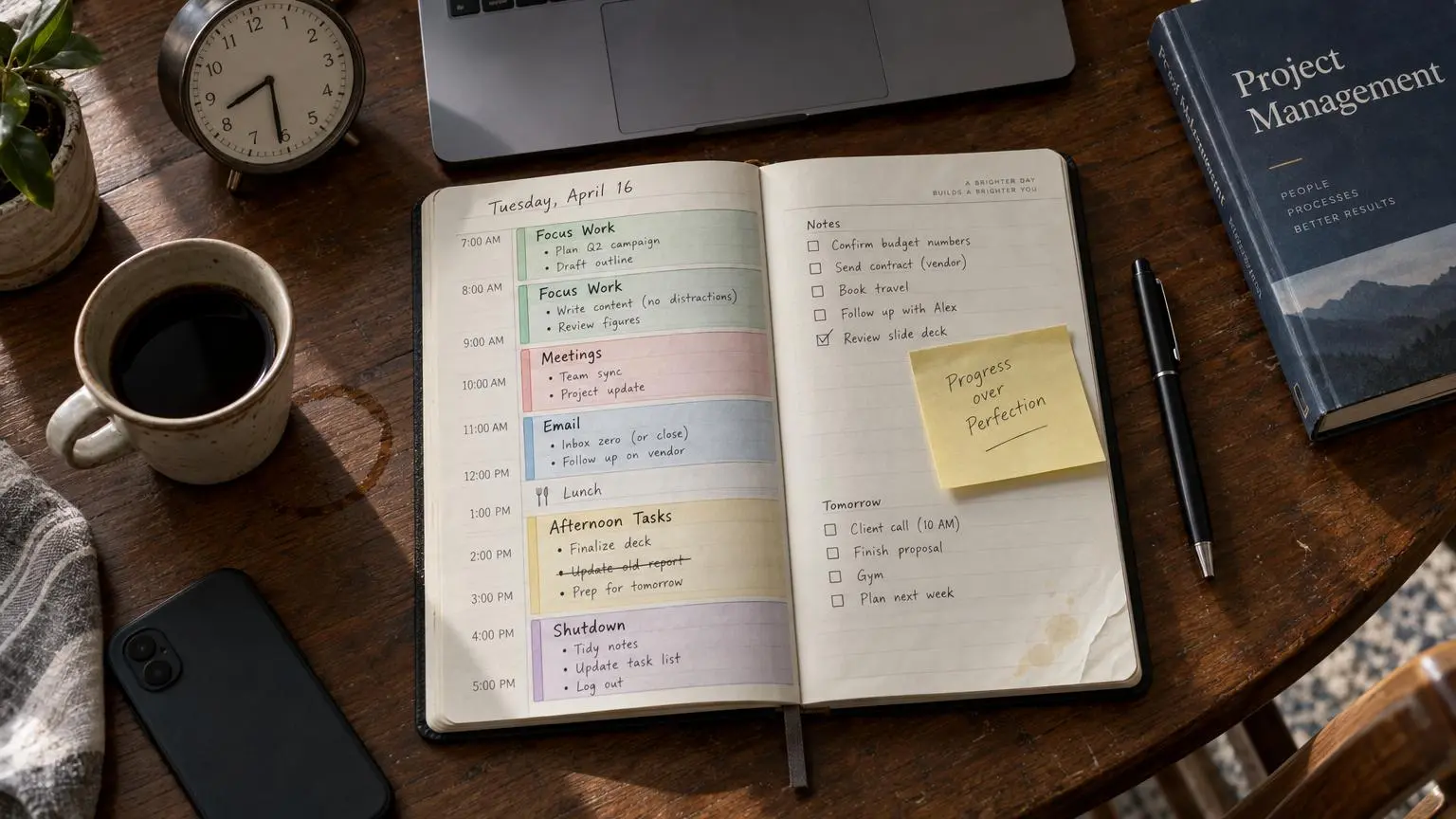
Here's a plain example. Not a template to copy blindly, just a shape that works.
Example structure
8:30 to 8:45
Quick planning check. Review fixed commitments, label the day type, choose the most important task, and confirm the first focus block.
9:00 to 9:25
First focus block on the priority. No messages first. Reactive work expands if you feed it early.
9:30 to 9:55
Second block on the same task. Continue, refine, or finish a clear next step.
10:15 to 11:30
Meetings, class, or collaboration.
11:30 to 12:00
Email, messages, light admin. Keep it contained.
1:00 to 1:25
Another block for meaningful progress if the day allows. If not, use it for prep work tied to tomorrow's priority.
Afternoon
Shallow tasks, review, errands, or coordination. This is where lower-energy work belongs for most people.
Last 10 minutes
Shutdown. Capture what's unfinished, update estimates, move or drop loose tasks, and protect tomorrow from becoming a dumping ground.
For students, the same logic applies. Put your hardest study block before low-value digital wandering gets a vote. For meeting-heavy knowledge work, the win may be one protected session before the calendar starts making decisions on your behalf.
The Review Habit That Helps You Stop Overestimating Your Day
The day isn't finished when work stops. It's finished when you learn from it.
This review does not need to be long or emotional. In fact, better if it isn't. Stay with facts:
- what got done
- what took longer than expected
- what got interrupted
- what should move
- what should just be dropped
Compare planned blocks with completed blocks. That's where calibration comes from. After several days, patterns show up. Maybe your afternoons are consistently overstuffed. Maybe setup time keeps eating the first 15 minutes. Maybe morning focus is stronger than you thought, or weaker by Thursday.
Those patterns are the whole game. Planning gets easier when it becomes a feedback loop instead of a daily judgment ritual.
This is another place where Flocus helps without making a fuss about it. Because tasks are tied to focus blocks, you can see estimate-versus-actual patterns across the week or month. The recaps come from real days, not wishful logging. And if you happen to own a Muse headband, Flow Tracking adds another layer by showing focus quality during the session, not just time spent. Useful, but optional. The method works perfectly well without hardware.
Honest review is how planning stops being performance and starts becoming skill.
Conclusion
A realistic daily schedule is not about fitting everything in. It's about choosing what matters, estimating honestly, and protecting the conditions that let real work happen.
The method is simple, though not always easy: assess your actual capacity, pick one priority, estimate in focus blocks, leave room for friction, replan when the day shifts, and review what happened. Do that for a week and your schedule starts sounding less like a wishlist and more like the truth.
Tomorrow, keep it plain. Choose one most important task. Give it a protected focus block. Let the rest of the day earn its place around that decision.
Article Record
ReferencesPrimary sources used for this article
- Does time management work? A meta-analysis
- Self-regulation of time: The importance of time estimation accuracy
- How to Plan Your Day Without Overplanning: A 6-Step Method
- Deep Habits: Three Recent Daily Plans
- Build a Realistic Daily Schedule | Dayprints
- How to make a daily schedule that actually holds up
- The Official Daily Planning Guide - Sunsama Blog
- New research: How to make time for the work that matters - Inside Atlassian