The ideal study session length is rarely 25 minutes just because a timer says so. You finally understand the problem, then the bell rings—great for flashcards, lousy for a difficult proof.
What matters is the work, your energy, and whether you leave enough room to get past the warm-up. Don’t measure discipline by chair time; measure what actually moved.
Start by noticing:
- Whether you lock in after 10 minutes or 30
- When rereading turns into mental fog
- Which tasks need 50 quiet minutes, not another reset
Leave each block with real progress.
The Short Answer: What Is the Ideal Study Session Length?
There isn't one universal timer that works for every student. But if you want the short answer, here it is: for demanding study, the ideal study session length is usually 45 to 60 minutes, and 90 minutes is a practical ceiling for continuous deep focus.
Shorter blocks still have a place. Quite a useful one, actually.
- 25 to 30 minutes works well for flashcards, review, admin, easy homework, and getting started when you're avoiding the task.
- 45 to 60 minutes fits most serious studying.
- 60 to 90 minutes works for deep, context-heavy work when you're already engaged and the task needs sustained thinking.
If your attention starts slipping, your mistakes rise, or your brain turns into wet cardboard, the answer is usually not more grit. It's a break.
The useful way to choose a session length is by task type, energy, and recovery rhythm, not by copying whichever timer got popular first.
Why the “Study Longer = Study Better” Idea Fails
A lot of students carry the same bad rule around: if you sat there for a long time, it counts as good studying. It feels virtuous. It also fails pretty often.
Long study hours can hide a mess:
- constant task switching
- rereading without absorbing much
- phone checks every few minutes
- lots of effort, not much progress
That's the trap. You finish a three-hour "study session" and still can't say what actually moved forward.
We've seen this over and over. Endurance gets mistaken for effectiveness. Then guilt fills the gap. If you're tired enough, it feels like work must have happened.
Not necessarily.
Better methods can beat longer hours. A focused 50-minute block on one hard chapter can do more than two foggy hours split between lecture notes, messages, snacks, and half a YouTube tab you swear was educational.
Study success is better understood as a cycle:
A repeatable focus cycle
- Set target
decide what you're trying to finish
- Focus block
focus for a defined block
- Stop point
stop at a real endpoint
- Recovery
recover before the next round
That's much calmer than the usual student approach, which is often "sit until vaguely miserable."
The ideal study session length is about usable concentration, not impressive calendar time.
What Research Suggests About Focus Limits
Most people don't hold high-quality attention for hours at a time. That's the boring truth, and it's helpful once you stop arguing with it.
A practical upper limit for continuous hard focus is about 90 minutes. Past that, thinking often slows down, errors creep in, and recovery gets harder if you keep pushing. Some students feel the drop closer to 60 or 75 minutes. A few can stretch near 90 when conditions are good.
Attention works in waves. It rises, stabilizes for a while, then starts thinning out. It does not stay flat all afternoon just because your planner says "study."
A few points matter here:
- Ninety minutes is not a law. It's a rough ceiling.
- Twenty-five minutes is popular, not sacred. It is not the scientifically proven best focus session length.
- Warm-up costs are real. If it takes you 10 to 15 minutes to settle into a hard task, very short sessions can trap you in permanent startup mode.
That last part gets ignored. Students often blame themselves for struggling with hard work in short blocks, when the block itself is the problem.
If you're studying dense material, the first minutes often go to reopening the mental file: what the chapter is doing, where the proof went off the rails, why your draft argument felt thin. Ending right after that is a rough deal.
Cognitive limits are real. But the best block length still depends on the work in front of you.
Why 25 Minutes Helps Some Students and Frustrates Others
The classic short timer spread because it solves a real problem: starting. A 25-minute block feels manageable. It lowers resistance. It helps when the barrier is emotional, not intellectual.
That's why it still works so well for:
- flashcards
- vocabulary review
- checking understanding
- routine problem sets
- starting a task you've been ducking for two days
But short sessions can break down fast with deep work.
Where 25 minutes starts to feel cramped
In harder tasks, the first stretch often disappears into setup:
- orienting to the question
- gathering the relevant notes
- recalling the last step
- rebuilding context in working memory
Then, just when focus becomes useful, the timer rings.
That's why 25 minutes often underperforms for:
- proofs
- essay drafting
- dense reading
- coding
- complex problem solving
A good rule is simple:
If the timer keeps ending right when you finally lock in, the session is probably too short.
Students sometimes treat that frustration as a discipline issue. It usually isn't. It may just mean you're using a sprint timer for work that needs a longer runway.
The Real Question: Match the Session to the Work
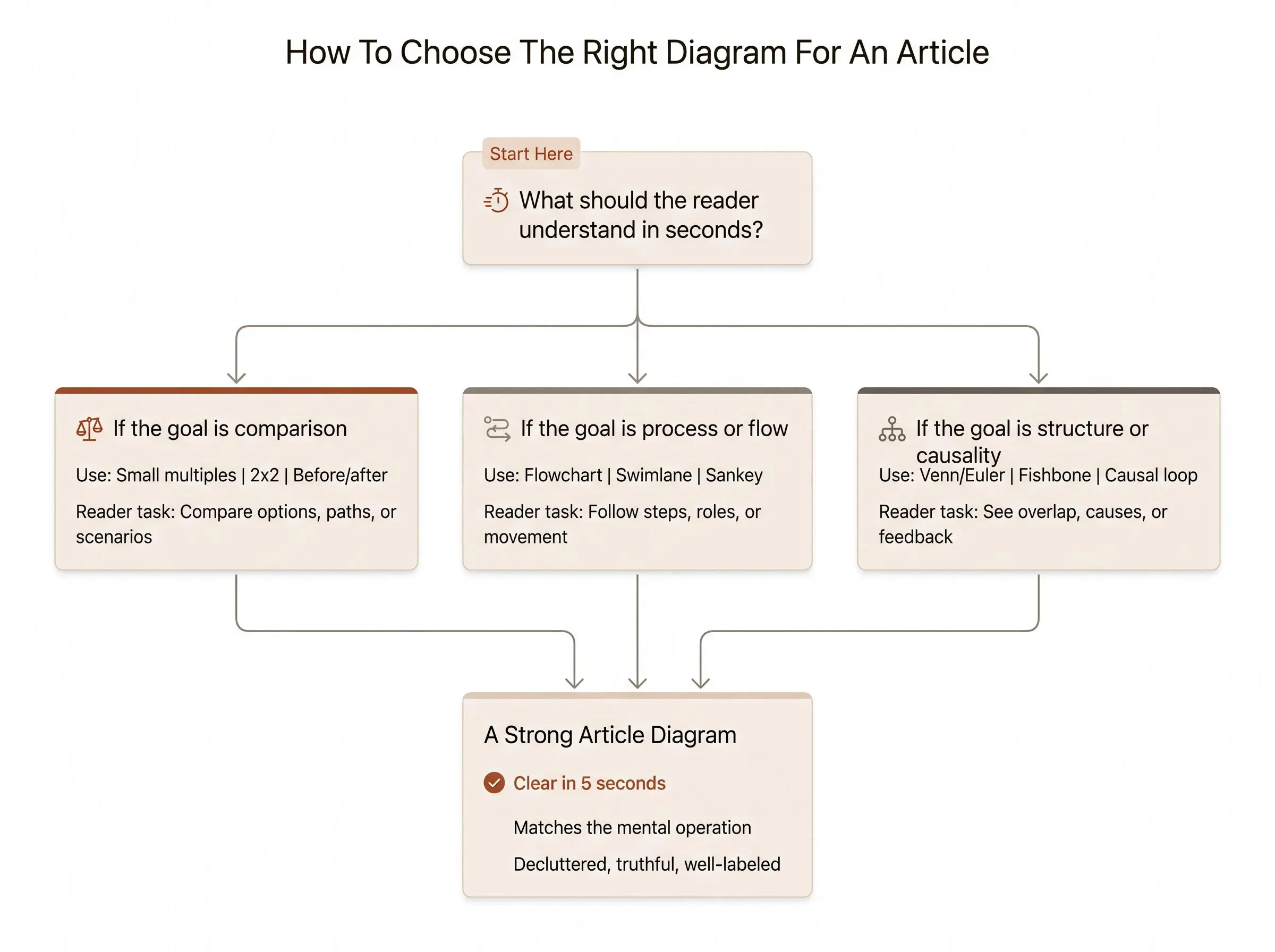
The best focus session length changes when the work changes. That's not inconsistency. That's basic task design.
A simple way to choose block length is to sort your work into three buckets.
Shallow or low-complexity work
Use 25 to 30 minutes.
This fits things like reviewing class notes, memorizing terms, checking quiz questions, or clearing small admin tasks. Warm-up is light, and switching costs are tolerable.
Medium-depth work
Use 45 to 60 minutes.
This is the range most students should lean on for serious studying. Long enough to get past resistance. Short enough that you can usually recover well and do another block later.
Good examples:
- solving a meaningful set of problems
- outlining an essay
- working through lecture material you don't fully understand yet
Deep, context-heavy work
Use 60 to 90 minutes.
This is your deep work block duration for tasks that need sustained reasoning or a full mental model, like writing a lab report, drafting a full argument, doing new calculus problems, or wrestling with technical reading that doesn't forgive distraction.
The timer should follow the complexity of the task, not your moral ambition. Memorizing terms and writing a coherent methods section are not the same kind of work. Don't force them into the same box.
30 vs 50 Minute Sessions: Which One Is Better?
This is the decision a lot of students actually face. You've outgrown 25 minutes, but an hour sounds a bit optimistic.
Thirty-minute sessions are useful because they're easy to accept. On low-energy days, that matters. They work well when the task is light, unclear, or you're still building concentration stamina.
Fifty-minute sessions often win for actual learning.
Why? Because 50 minutes usually covers the warm-up tax and still leaves room for real work. You can read something difficult, solve a few serious problems, or draft a page without feeling chopped into pieces.
The tradeoff is clean:
- 30 minutes wins on accessibility
- 50 minutes wins on depth
If you're deciding between the two, use this:
- Choose 30 minutes when resistance is high or the task is simple.
- Choose 50 minutes when the task is demanding enough that stopping early would be costly.
And if 30 feels too short but 60 leaves you flat, 50 is often the sweet spot. Not glamorous. Very effective.
How Long to Work Before a Break
How long should a focus session be before a break? Same answer, really: long enough to do useful work, short enough that quality hasn't collapsed yet.
Here are practical pairings that work for most students:
- 25 to 30 minutes of work, then a 5-minute break
- 45 to 60 minutes of work, then a 10 to 15-minute break
- 60 to 90 minutes of work, then a 15 to 20-minute break
Longer blocks need actual recovery. A glance at your phone does not count as recovery. It counts as handing your attention to something louder.
A common mistake is finishing a heavy 75-minute block, taking a three-minute break, then wondering why the next session feels dead on arrival. The break was too small for the load.
What one randomized study found about a 90-minute lesson
In a randomized study of 64 nurse-anesthesia students, students received either three 30-minute teaching sessions separated by 10-minute intervals or one continuous 90-minute lesson. The spaced group scored significantly higher on immediate learning and on knowledge-retention tests two and four weeks later (p \< .001; η = .576).
That is not a direct test of every student’s personal timer, and it studied instructor-led teaching rather than independent homework. Still, it gives the break advice a useful boundary: if you have a full 90 minutes of dense material, splitting the learning into shorter rounds with genuine pauses may protect retention better than treating all 90 minutes as uninterrupted effort. The pauses add elapsed time, so this is a comparison of a continuous 90-minute lesson with a spaced format—not two schedules with identical clock time.
Breaks are not evidence that you lack discipline. They're part of the design.
What to Do During Breaks So the Next Session Still Works
A break can refresh the next block or quietly ruin it. The quality of the break matters more than students expect.
Simple options work best:
- stand up
- get water
- look away from the screen
- walk for a few minutes
- write one sentence about where you'll restart
That last one is underrated. Before you stop, leave yourself a breadcrumb. Write the next step in plain language. "Start with question 4 and recheck the derivative." "Draft the second paragraph from the counterargument." Small move, big difference.
Break habits that often steal the next block:
- social media scrolling
- messaging spirals
- opening unrelated tabs
- starting another mentally demanding task
If every break blows up your momentum, even a well-chosen session length will underperform. Students blame the timer for a break problem all the time.
Time of Day Often Matters More Than Session Length
A shorter session at your best hour can beat a much longer session at your worst hour. We wish more students took that seriously.
For many people, the sharpest study window shows up earlier than expected, often within the first 90 minutes after you're fully awake and functioning like a person again. Not always, but often enough that it's worth testing.
The same 50-minute block can feel very different at 9 a.m. and late evening. One version feels crisp. The other feels like reading through soup.
If you keep asking, "What's the ideal study session length?" but ignore when you're doing the work, you're solving the smaller problem.
Use your clearest hour for the hardest subject. Put review, admin, and easier tasks later. Better timing often fixes what students think is a bad timer.

How Many Deep Study Sessions Fit in a Good Day?
The hidden question behind session length is how many serious blocks you can actually sustain. Students usually overestimate this, then feel guilty when reality shows up.
For deep study, 2 to 3 high-quality blocks in a day can outperform many hours of scattered effort. That's not laziness. That's respecting how attention works.
A day can be shaped a few different ways:
- one 60-minute deep block plus two shorter review blocks
- two 50-minute deep blocks with a longer recovery gap between them
- three 60 to 90-minute blocks on exam-prep days if sleep and energy are solid
Deep blocks should go to the hardest material. Shorter sessions can handle review, admin, and easier assignments.
The goal is not to fill every hour with intensity. That's a fast way to turn studying into a grim little marathon.
Signs Your Study Session Is Too Short
Sometimes the block is failing because it ends before the real work begins.
Watch for these signs:
- you spend most of the session settling in
- the timer ends right when the task finally becomes clear
- you keep reconstructing the same mental context every block
- your output feels fragmented despite real effort
- hard tasks spill across too many sessions and never gain momentum
If that sounds familiar, don't jump straight to "I need more motivation." First, lengthen the block by 10 to 20 minutes and see what changes.
A lot of focus problems are really setup problems wearing a dramatic costume.
Signs Your Study Session Is Too Long
Longer is not automatically deeper. Past a point, it just gets blurrier.
A session is probably too long if:
- mistakes increase near the end
- you reread more and process less
- your body is present but your attention has left the building
- breaks stop restoring you
- you finish with fog instead of a clean stopping point
- your mood gets worse as the session drags on
The fix is usually one of three things:
- shorten the block
- improve the break
- move the task earlier in the day
Exhaustion is not the same thing as deep work. Worth saying plainly.
A Simple Method to Find Your Personal Best Focus Session Length
You do not need a personality test for this. You need a small experiment.
Over a week or two, test three session lengths on similar kinds of work:
- 30 minutes
- 50 minutes
- 75 minutes
After each session, note:
- how long it took to settle in
- what you actually finished
- where confusion or errors showed up
- how fresh you felt at the end
- whether the break reset your attention
Compare results by task type. Don't hunt for one magic number that fits everything.
The best focus session length is the one that leads to consistent completion, not the one that sounds the most serious.
This is one place where our Focus Timer helps in a practical way. You can run custom block lengths and log them against the task you planned, then compare estimated versus actual time. That's useful because memory lies. The task log usually doesn't.
Planning Beats a Perfect Timer
A good timer helps. But the timer matters a lot more when you already know what the block is for.
This is where many focus tools fall short. They measure effort, but they don't force the hard and useful decision: what is this block actually supposed to move? Without that, the session starts fuzzy and often stays fuzzy.
A clear objective cuts wasted ramp-up time. Even shorter sessions get better when the task is already chosen.
Our Daily Planner is built around that layer:
- pick one most-important task
- keep the list short
- estimate the work in focus blocks
- compare the estimate with what really happened later
The point isn't to create another system to maintain. It's to make each block easier to start and easier to judge. A timer floating on its own looks productive. A timer attached to a real task tells the truth.
If You Want to Measure Focus Quality, Not Just Time
Time-only systems have an obvious limit. Two 60-minute sessions can look identical on paper and feel completely different in practice.
One may be sharp and absorbed. The other may be 60 minutes of staring, fidgeting, and rereading the same paragraph like it insulted you.
For students who already own a Muse headband, or are curious about measuring attention more directly, our Flow Tracking adds another layer:
- live focus measurement during work
- a short personal calibration
- session feedback on states like Flow, Overload, and Low Engagement
This is optional. The planner works fine without hardware.
But for the niche group who want more than minutes counted, it can help refine the ideal study session length with better feedback. Not just how long you worked, but when your attention was actually alive.
Common Mistakes When Choosing a Study Session Length
A lot of session-length problems come from bad assumptions, not bad effort.
Common mistakes include:
- copying someone else's timer without considering the task
- treating 25 minutes as the only legitimate format
- stretching blocks longer when the real issue is poor sleep or unclear goals
- taking fake breaks that add more stimulation than recovery
- judging a block by how long it felt instead of what it produced
- using one session length for every subject and energy state
- ignoring the first 10 to 15 minutes of ramp-up
- confusing exhaustion with depth
Students are often much harsher with themselves than the situation requires. Sometimes the timer is wrong. Sometimes the task is vague. Sometimes it's 10:45 p.m. and your brain has filed a complaint.
A Practical Starting Framework for Most Students
If you want a calm default, use this and adjust from there.
- 30 minutes for review and low-resistance tasks, then a 5-minute break
- 50 minutes for most serious study, then a 10 to 15-minute break
- 75 to 90 minutes for your hardest work when energy is strong, then a 15 to 20-minute break
Keep the day simple:
- decide the top task first
- do one or two meaningful blocks before adding more
- review what actually got done
That's enough structure for most students. You don't need a more elaborate ritual. Usually you need fewer loose ends.
| Study block | Best for | Break |
|---|---|---|
| 30 minutes | review and low-resistance tasks | 5 minutes |
| 50 minutes | most serious study | 10 to 15 minutes |
| 75 to 90 minutes | hardest work when energy is strong | 15 to 20 minutes |
Conclusion
The ideal study session length depends on task depth, warm-up cost, and recovery. For many students, 45 to 60 minutes works best for real studying, while 90 minutes is a practical upper limit for continuous deep focus.
The shift that matters is this: deep study is not a test of how long you can sit there. It's a rhythm. Choose one clear task, give it a block that fits the work, and stop before quality falls apart.
This week, test one shorter block and one deeper block. Attach each to a single task. Then judge them by focus quality and completion, not by hours alone. That tends to clear things up fast.
Article Record
ReferencesPrimary sources used for this article
- Investigating the Effectiveness of Self-Regulated, Pomodoro, and Flowtime Break-Taking Techniques Among Students
- Assessing the efficacy of the Pomodoro technique in enhancing anatomy lesson retention during study sessions: a scoping review
- "Give me a break!" A systematic review and meta-analysis on the efficacy of micro-breaks for increasing well-being and performance
- The effect of spaced learning on the learning outcome and retention of nurse anesthesia students: a randomized-controlled study
- Study longer or study effectively? Better study strategies can ...
- How does chunking help working memory?